Rafting for beginners offers an outdoor adventure unlike any other. The roar of the rushing river fills the air. Cool mist hits your face instantly. Adrenaline surges through your veins as your paddle strikes the swirling water. For individuals stepping onto a raft for the first time, navigating a moving river can feel intimidating. It is completely natural to experience a mix of nervous anticipation and excitement. Understanding the mechanics of the river transforms that initial anxiety into pure confidence.
This comprehensive guide will demystify the entire experience of rafting for beginners. We ensure you know exactly what to expect from start to finish. Our team focuses on safety protocols, physical preparation, and river dynamics. You will discover that river rafting is a highly structured and accessible sport. With the right mindset, your first river run will spark a lifelong passion for outdoor adventure.
Understanding River Classifications for New Paddlers
Before you lace up your water shoes, you must understand river ranking systems. The international scale ranks rapids from Class I to Class VI. This scale provides a standardized framework to assess safety and technical difficulty. For those exploring rafting for beginners, your journey will take place on gentler waters. You will mostly encounter Class I, Class II, or Class III rapids.
Class I rivers feature fast-moving water with small ripples. These sections require minimal maneuvering and serve as a relaxing introduction. Class II rapids introduce small waves and clear channels. They offer a bit more bounce while remaining exceptionally forgiving to novices. Class III rapids represent the true entry point into exciting white water adventure. They feature moderate, irregular waves and narrow channels. In a Class III environment, you will actively work as a team to paddle through waves.
A Detailed Timeline of Your First Day on the River
Arriving at the rafting outpost marks the official start of your adventure. Knowing the sequence of events can significantly ease your morning jitters. The day typically begins with check-in and registration at the main office. You will sign waivers, verify your trip details, and meet your trip leader.
Once administrative tasks are complete, the outfitter distributes your essential safety gear. Every participant receives a properly fitted life jacket and a helmet. From the gear pavilion, your group will head to a designated orientation area. A senior river guide then leads a mandatory safety briefing. Following the safety talk, you will transport to the putting-in location. This is the physical spot where the team launches the rafts into the river.
Mastering Commands for Rafting for Beginners
An essential component of your trip is learning how to control the watercraft. You do not need extraordinary upper-body strength to be a successful paddler. Proper technique relies on utilizing your core muscles and torso leverage. When you sit on the outer rim, you will slip one foot into the securement pocket. This foot placement stabilizes your lower body during big bumps.
Your guide acts as the captain of the boat. They shout clear, one-word or two-word commands to orchestrate your movements. The most common command is forward paddle. This signal requires everyone to synchronize their strokes. You must dig your blades into the water simultaneously to drive the boat forward. Back paddle slows the raft down or alters its angle. Commands like left turn or right turn require only one side of the boat to paddle.
Essential Gear and Clothing to Stay Comfortable and Safe
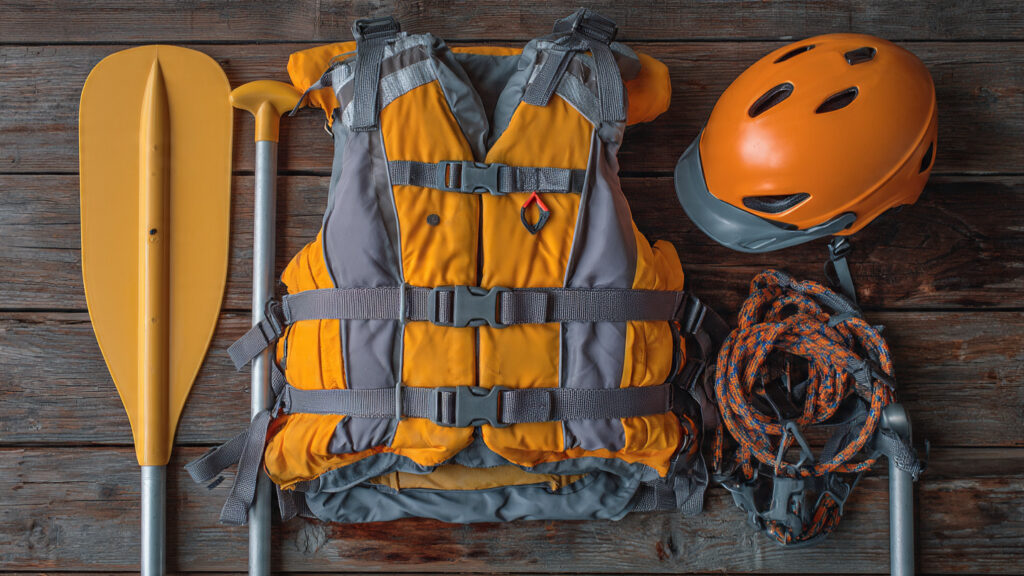
- Personal Flotation Device (PFD): Type V or Type III life jackets that staff members clip tightly to your body so that the vest cannot slide over your ears.
- Whitewater Helmet: A lightweight, impact-resistant helmet that secures under your chin to protect your head from low-hanging branches or submerged rocks.
- Secure Water Shoes: Footwear with thick rubber soles and secure heel straps, such as river sandals or old sneakers, to protect your feet.
- Moisture-Wicking Layers: Synthetic fabrics like polyester, nylon, or fleece that dry quickly and keep you warm during the trip.
- Sun Protection Essentials: Waterproof sunscreen with a high SPF rating, lip balm with UV protection, and a retaining strap for polarized sunglasses.
- Splash Jacket or Wetsuit: Heavy-duty, water-resistant outerwear that outfitters provide during early spring or late autumn trips to shield your core.
Overcoming Common Fears in Rafting for Beginners
Many people wonder what happens if they accidentally fall out of the raft. Outfitters design every aspect of the trip with this scenario in mind. Guides undergo intense training in swiftwater rescue techniques to handle swimmers efficiently. If you find yourself in the water, the single most important rule is to remain calm. Look for your guide immediately after resurfacing.
Your life jacket keeps you floating securely above the surface. You do not need to struggle to keep your head above water. If you float away from the boat, you must adopt the standard Downstream Swimming Position. This position involves lying flat on your back with your feet pointing downstream. Keeping your feet elevated prevents them from catching on submerged rocks. Your hands act as small oars to guide your movement toward calmer water.
Choosing the Right Outfitter for Rafting for Beginners
Selecting the right commercial outfitter ensures a safe and professional experience. A reputable outfitter holds all necessary federal, state, or provincial operating permits. They possess a clean safety record and employ certified guides. When researching potential companies, read online reviews written by other novices. Look for comments about how patient and instructive the staff is toward beginners.
Do not hesitate to call the outfitter directly before booking. Ask about their guide training standards and the age of their equipment. You should also ask about the specific river sections they recommend for first-timers. Additionally, consider the seasonal timing of your trip. River flows can change drastically depending on spring snowpack melt or summer dam releases. A river that offers gentle waves in August might transform into a raging torrent in May.
Environmental Etiquette and River Preservation Tips

- Pack Out All Trash: Ensure that every piece of plastic, food wrapper, and aluminum can goes inside a secure trash receptacle.
- Respect Wildlife Habitats: Observe river birds, deer, and fish from a safe distance without making loud noises.
- Secure Personal Belongings: Leave car keys, wallets, cell phones, and loose jewelry inside your vehicle or the outpost lockers.
- Use River-Safe Sunscreen: Opt for mineral-based, biodegradable sunscreens that do not contain harmful chemicals like oxybenzone.
- Stay on Designated Trails: Walk only on established pathways during lunch stops, scouting points, or recreational breaks.
- Follow Leave No Trace: Leave rocks, historical artifacts, river glass, and interesting driftwood exactly where you find them.
Mental and Physical Rewards of Rafting for Beginners
Engaging in rafting for beginners delivers a surprising array of health benefits. Navigating a river requires continuous core stabilization, upper-body engagement, and lower-body balance. This physical exertion makes the activity an excellent full-body cardiovascular workout. The exercise combines with fresh air to encourage deep respiration. It increases blood circulation and releases high levels of endorphins that naturally elevate your mood.
Spending several unplugged hours immersed in a dramatic natural canyon provides a mental break. You can completely escape from modern digital distractions and daily stressors. On a psychological level, conquering the challenges of a river fosters personal empowerment. Overcoming the initial fear of the rapids teaches individuals that they can handle unexpected situations. The shared experience creates strong bonds of camaraderie, leaving you with lasting memories.
References
- International Rafting Federation (IRF): The official global body for whitewater rafting, providing comprehensive safety guidelines, river classification standards, and international guide training certifications.
- America Outdoors Association: A leading international association for outdoor recreation providers, offering professional safety metrics, outfitter selection tools, and educational resources for first-time rafters.