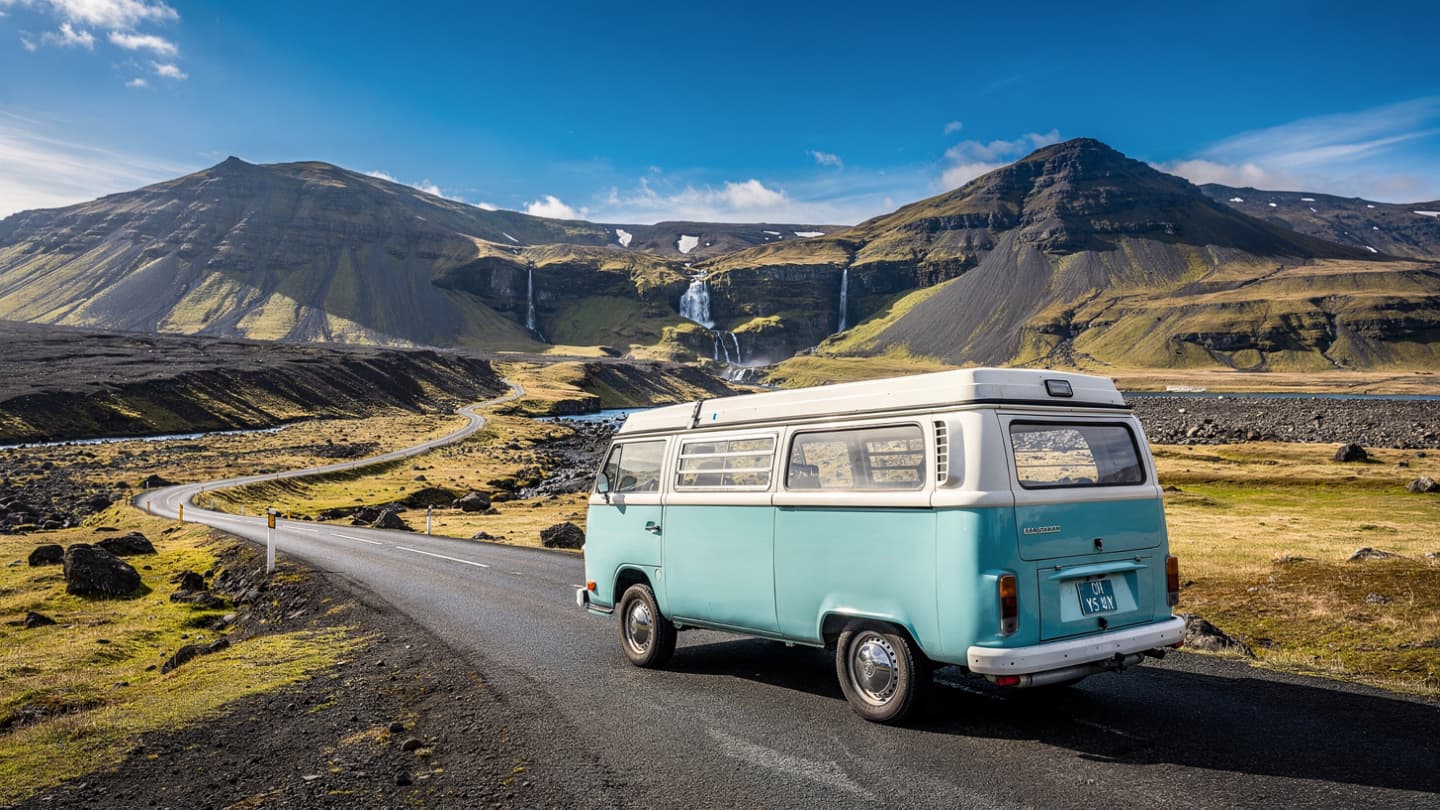
A 5-day Iceland Ring Road itinerary is fast, scenic, and packed with some of the country’s most unforgettable landscapes. Iceland’s Ring Road, also known as Route 1, circles the island and connects many of Iceland’s most famous natural attractions, including waterfalls, black sand beaches, glaciers, fjords, lava fields, geothermal areas, and charming small towns.
This route is best for travelers who want to see as much of Iceland as possible in a short amount of time. However, it is important to understand that five days is a tight schedule. You will drive long distances, move hotels almost every night, and need to manage your time carefully. If you prefer slow travel, a 7-day to 10-day route will feel more relaxed. But if you are comfortable with road trips and early starts, this 5-day Iceland Ring Road plan can be an amazing adventure.
The full Iceland Ring Road is about 1,322 kilometers, or 820 miles, according to Visit Iceland. It passes through dramatic regions where the scenery can change quickly from green farmland to volcanic sand, glacier views, coastal cliffs, and snow-covered mountains. Because Iceland’s weather and road conditions can change fast, travelers should check official road and safety updates before driving each day.
Quick 5-Day Iceland Ring Road Itinerary Overview
This 5-day Iceland Ring Road itinerary starts and ends in Reykjavík. It follows the route counterclockwise, which is one of the most popular directions because it lets you visit the South Coast early in the trip. The South Coast has many famous sights close together, making it a strong start for first-time visitors.
| Day | Route Strategy | Key Landmarks & Must-See Attractions | Driving Time (Est.) |
| Day 1 | South Coast Adventure | Seljalandsfoss, Skógafoss, Reynisfjara Black Sand Beach | 3 – 4 Hours |
| Day 2 | Glaciers & Ice Lagoons | Fjaðrárgljúfur, Skaftafell, Jökulsárlón, Diamond Beach | 3.5 – 4.5 Hours |
| Day 3 | The Scenic Eastfjords | Coastal fjords, Petra’s Stone Collection, Vestrahorn | 3 – 4 Hours |
| Day 4 | North Iceland Wonders | Lake Mývatn, Hverir Geothermal Area, Goðafoss | 3.5 – 5 Hours |
| Day 5 | The Long Drive West | Akureyri City, Skagafjörður, Return to Reykjavík | 5 – 6 Hours |
This route is designed for travelers who want a complete Iceland Ring Road experience without adding the Westfjords or the Highlands. It focuses on the main Route 1 loop and nearby attractions that are realistic for a 5-day trip.
For the smoothest journey, book accommodation in advance, especially during summer. You should also keep your daily plan flexible because Icelandic weather can affect driving time. SafeTravel Iceland notes that weather and road conditions can be different from what visitors are used to and may change quickly, so daily checks are essential.
Day 1: Reykjavík to Vík
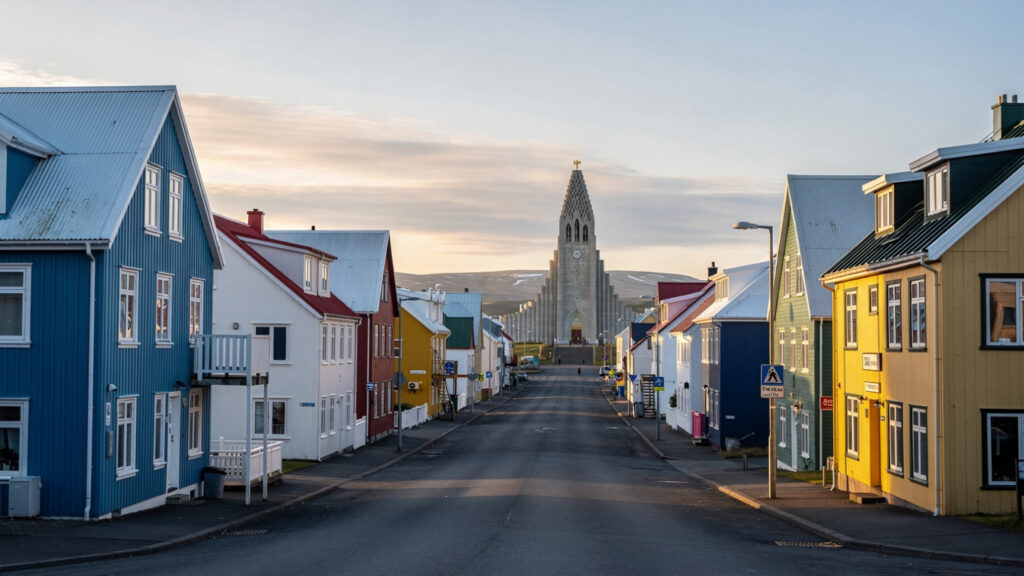
Start your Iceland Ring Road trip in Reykjavík and head east toward the South Coast. This is one of the most beautiful and accessible sections of the route, which makes it a perfect first day. Try to leave early so you have enough time for waterfalls, coastal viewpoints, and a relaxed arrival in Vík.
Your first major stop is Seljalandsfoss, one of Iceland’s most famous waterfalls. The waterfall drops from a tall cliff, and in good conditions, visitors can walk behind it for a unique view. Bring a waterproof jacket because the spray can be strong. Nearby, you can also visit Gljúfrabúi, a hidden waterfall inside a narrow canyon. It is only a short walk from Seljalandsfoss and is worth visiting if you have time.
Continue along the coast to Skógafoss, another powerful waterfall and one of the most iconic sights on the South Coast. You can admire it from the base or climb the stairs to the viewing platform above. The climb takes effort, but the view over the coastline and surrounding landscape is rewarding.
After Skógafoss, continue toward Reynisfjara Black Sand Beach near Vík. This beach is famous for its black volcanic sand, basalt columns, sea stacks, and dramatic waves. It is beautiful, but it can also be dangerous. Stay far away from the water and never turn your back on the waves. The currents here are extremely strong.
Spend the night in Vík or the surrounding area. Vík is a small village, but it has guesthouses, restaurants, fuel stations, and easy access to South Coast highlights. If the weather is clear and you still have energy, you can visit Dyrhólaey for coastal views before ending the day.
Day 2: Vík to Höfn
Day 2 of this Iceland Ring Road itinerary takes you from Vík toward Höfn, passing through some of Iceland’s most cinematic landscapes. This day includes canyons, glacier views, black sand plains, and one of the most famous glacier lagoons in the country.
Begin with Fjaðrárgljúfur Canyon if conditions and time allow. This winding canyon has steep green walls and a walking path with several viewpoints. It is a great place for photos, but access can sometimes be restricted to protect the fragile landscape. Always follow signs and stay on marked paths.
Continue east across wide lava fields and open landscapes toward Skaftafell, part of Vatnajökull National Park. If you enjoy short hikes, Skaftafell is a good place to stretch your legs. One popular option is the hike to Svartifoss, a waterfall surrounded by dark basalt columns. However, this hike takes time, so only include it if your schedule is not too rushed.
The highlight of the day is Jökulsárlón Glacier Lagoon. Here, large icebergs float in a deep lagoon before drifting toward the sea. Just across the road, Diamond Beach is where pieces of ice wash onto black sand, creating one of Iceland’s most memorable natural scenes. These two stops are close together, so plan enough time to enjoy both.
After visiting the glacier lagoon area, continue to Höfn for the night. Höfn is known as a good base in southeast Iceland and is famous for langoustine. It is also a practical overnight stop before entering the Eastfjords the next day.
This day involves several long driving stretches, but the scenery is constantly changing. Keep your camera ready, but avoid stopping suddenly on the road. Use official pullouts and parking areas whenever you want to take photos.
Day 3: Höfn to Egilsstaðir and the Eastfjords
Day 3 brings you into East Iceland, one of the quieter and more underrated parts of the Iceland Ring Road. The Eastfjords are known for winding coastal roads, mountain views, fishing villages, and peaceful scenery. Compared with the South Coast, this region usually feels less crowded and more remote.
From Höfn, drive along the coast and enjoy views of steep mountains, narrow fjords, and small settlements. The road can feel slower here because it follows the shape of the coastline. However, that is part of the experience. Instead of rushing, treat this day as a scenic drive with short stops along the way.
Djúpivogur is a pleasant village where you can stop for coffee, fuel, or a short walk. Depending on your route and time, you may also pass through small fjord towns such as Breiðdalsvík, Fáskrúðsfjörður, or Reyðarfjörður. Each has a quiet local feel and offers a different side of Iceland beyond the major tourist attractions.
Your overnight base can be Egilsstaðir, the largest town in East Iceland, or a nearby fjord town such as Seyðisfjörður if you want a more scenic stay. Seyðisfjörður is known for colorful houses, mountain surroundings, and a peaceful harbor atmosphere. However, the road into Seyðisfjörður crosses a mountain pass, so check conditions before going, especially outside summer.
This day is less about ticking off famous landmarks and more about enjoying the road itself. The Eastfjords show why the Iceland Ring Road is not just a route between attractions. It is a journey through changing landscapes, quiet communities, and remote coastal beauty.
Day 4: Egilsstaðir to Akureyri via Lake Mývatn
Day 4 is one of the most diverse days on this 5-day Iceland Ring Road itinerary. You will leave East Iceland, cross wide open landscapes, visit geothermal areas around Lake Mývatn, stop at a major waterfall, and end the day in Akureyri, the largest town in North Iceland.
Start early from Egilsstaðir and drive toward the Mývatn region. This part of the route can feel remote, with long stretches between towns. Make sure you have enough fuel before leaving. As you approach Lake Mývatn, the landscape becomes more volcanic, with lava formations, craters, steam vents, and geothermal fields.
Lake Mývatn is one of the best areas in North Iceland for natural attractions. You can visit Hverir, a geothermal area with bubbling mud pots and steaming vents. The smell of sulfur is strong, but the landscape feels otherworldly. Nearby, you may also visit Dimmuborgir, a lava field with unusual rock formations and walking paths.
If you want a relaxing break, consider visiting the Mývatn Nature Baths. They are often described as a quieter alternative to the Blue Lagoon, although the experience is different. This can be a great way to rest during a busy road trip, especially after several days of driving.
Before reaching Akureyri, stop at Goðafoss, one of North Iceland’s most famous waterfalls. It is easy to access from the Ring Road and makes a perfect final nature stop before entering the city. The waterfall is wide, powerful, and beautiful from both sides.
Arrive in Akureyri for the night. Akureyri has restaurants, shops, hotels, and a relaxed town atmosphere. After several nights in smaller places, it can feel refreshing to stay somewhere with more services.
Day 5: Akureyri to Reykjavík
The final day of your Iceland Ring Road trip takes you from Akureyri back to Reykjavík. This is a long driving day, so plan your stops carefully. The goal is to enjoy the journey without making the day too crowded.
Start with a short walk in Akureyri if you did not have time the night before. You can visit the town center, see the church, or grab breakfast before getting back on Route 1. Then begin the drive west through North Iceland’s valleys, farmland, coastal views, and mountain scenery.
If you want a simple stop, consider visiting a local café or viewpoint along the way rather than adding major detours. Because this is the last day, it is better to stay realistic. You may be tired from the previous four days, and the drive back to Reykjavík takes several hours.
Travelers with extra time can consider a short detour to places such as Hvítserkur, a sea stack in northwest Iceland, or the Borgarfjörður area closer to Reykjavík. However, these stops add driving time. If your flight is the next morning, it is smarter to return to Reykjavík at a reasonable hour.
Once you arrive back in Reykjavík, spend your final evening relaxing in the city. You can walk around the downtown area, visit Hallgrímskirkja, enjoy dinner, or simply rest after completing the Iceland Ring Road.
A 5-day route is intense, but finishing the full loop gives you a strong overview of Iceland’s landscapes. You will not see everything, but you will experience waterfalls, glaciers, beaches, fjords, geothermal areas, northern towns, and wide open roads in one compact trip.
Best Time to Drive the Iceland Ring Road in 5 Days
The best time for a 5-day Iceland Ring Road itinerary is usually late spring, summer, or early autumn. From around May to September, the days are longer, road conditions are generally easier, and travelers have more daylight for sightseeing. This matters a lot on a short itinerary because every hour counts.
Summer is the most popular season for driving the Iceland Ring Road. The long daylight hours make it easier to fit several stops into each day. Roads are usually more manageable, services are widely open, and the landscapes are green and bright. However, summer also brings higher prices, more visitors, and greater demand for accommodation.
Late spring and early autumn can be excellent alternatives. May, early June, September, and early October may offer fewer crowds and beautiful scenery. However, weather can still be unpredictable, and daylight is shorter than in peak summer. You should plan more carefully and avoid overloading each day.
Winter is possible, but it is not ideal for a first-time 5-day Ring Road trip. Short daylight hours, snow, ice, strong winds, and temporary road closures can make the journey more difficult. If you visit in winter, consider focusing on the South Coast, Golden Circle, and Reykjavík instead of forcing the full Ring Road into five days.
The Icelandic Road and Coastal Administration notes that traffic can increase significantly on the Ring Road during the busy summer months, especially near popular destinations. This means travelers should remain patient, alert, and careful when driving during peak season.
Practical Tips for a 5-Day Iceland Ring Road Trip
A short Iceland Ring Road itinerary requires good planning. The route is beautiful, but five days leaves little room for delays. These tips will help make the trip safer, smoother, and more enjoyable.
- Start early each day: Early starts give you more time for sightseeing and reduce the stress of long drives.
- Book accommodation in advance: Small towns can sell out quickly, especially in summer.
- Check road conditions daily: Use official sources before leaving each morning.
- Do not overpack the itinerary: Choose your must-see stops and leave space for weather changes.
- Fill fuel often: Some areas, especially in the east and north, have longer gaps between services.
- Bring layers: Icelandic weather can change quickly, even in summer.
- Use offline maps: Mobile coverage is usually good on Route 1, but remote areas can still be patchy.
- Respect warning signs: Beaches, glaciers, cliffs, and geothermal areas can be dangerous.
- Avoid stopping on the road: Use safe pullouts or marked parking areas for photos.
- Consider travel insurance: Weather delays and road issues can affect plans.
For safety, always check official updates before driving. SafeTravel Iceland provides travel safety information, while Iceland’s official traffic information service gives current road condition updates. These are especially important because Iceland’s weather can change quickly and affect road access.
Is 5 Days Enough for the Iceland Ring Road?
Five days is enough to drive the Iceland Ring Road, but it is not enough to explore every region deeply. This itinerary is best for travelers who enjoy fast-paced road trips and want to see a wide range of landscapes in a limited time. You should expect long driving days, early mornings, and quick stops.
If this is your first time in Iceland and you want a relaxed trip, seven to ten days would be better. A longer route gives you more time for hikes, hot springs, glacier activities, whale watching, and weather delays. It also allows you to spend more time in each region instead of moving every day.
However, a 5-day Iceland Ring Road itinerary can still be very rewarding. The key is to stay realistic. Do not try to visit every attraction you see online. Instead, focus on the strongest highlights: the South Coast, glacier lagoon, Eastfjords, Lake Mývatn, Goðafoss, and the drive back through North Iceland.
This trip is also better for travelers visiting during months with longer daylight. In summer, you can use the extended daylight to see more without feeling as rushed. In winter, the same route becomes much harder because there are fewer daylight hours and more weather-related risks.
In the end, five days gives you a powerful overview of Iceland. It is not a slow journey, but it is memorable. You will cover the full loop, experience the country’s changing regions, and understand why the Iceland Ring Road is one of the world’s most famous road trips.
Final Thoughts
A 5-day Iceland Ring Road itinerary is a bold and exciting way to experience Iceland. It takes you from Reykjavík to the South Coast, across glacier landscapes, through the quiet Eastfjords, into the geothermal north, and back to the capital. Along the way, you will see waterfalls, black sand beaches, icebergs, fjords, lava fields, and small towns that show the many sides of Iceland.
The most important part of planning this trip is balance. You need enough structure to cover the full route, but enough flexibility to adjust for weather, road conditions, and energy levels. Iceland rewards travelers who prepare well and respect the environment.
If you have only five days and want a true road trip adventure, the Iceland Ring Road can be an unforgettable choice. Keep your plans realistic, drive safely, check conditions daily, and focus on the experience rather than rushing from one stop to another.
References
- Visit Iceland – Iceland’s Ring Road: Official tourism information describing the Ring Road as a 1,322 km route around Iceland with major natural highlights.
- SafeTravel Iceland / Iceland Traffic Information: Official safety and travel condition resources for checking weather, road updates, and safe travel guidance before driving.