
Every traveler needs a travel emergency guide, not because disasters are guaranteed, but because the first hour of a travel problem matters more than most people realize. A canceled flight, missing passport, failed hotel booking, delayed suitcase, or medical issue abroad can feel chaotic, but the right sequence of actions can save your money, documents, time, and remaining trip.
Most travel advice says the same thing: stay calm, contact the airline, call your embassy, or speak to your hotel. That advice is not wrong. It is just incomplete. When you are standing at a foreign airport at midnight, your phone battery is low, the airline desk has a three-hour line, and your hotel check-in closes soon, vague advice does not help.
This travel emergency guide focuses on what to do first, what proof to collect, which mistakes to avoid, and how to recover the trip without making the situation worse.
Travel Emergency Guide for Canceled Flights
A canceled flight creates a race for limited seats. The travelers who act first usually get the better rebooking options. The ones who only stand in line often lose hours before speaking to anyone.
Do not make the customer service queue your only plan. Join it if you need to, but start solving the problem while you wait.
Open the airline app immediately. Airlines often push rebooking options through the app before gate agents can speak to every passenger. If the new flight works, confirm it quickly. Seats can disappear fast during a major disruption.
At the same time, call the airline. Try the international customer service number, not only the domestic one. Many passengers call the obvious number, which can create long wait times. International lines sometimes move faster because fewer people think to use them.
While you are on hold, search for backup flights. Look at any route that gets you to your destination within the next 24 hours. A connection through another city may work better than waiting for the airline’s first offer.
Take screenshots of useful options. Include the airline, flight number, departure time, route, and price. When you finally reach an agent, give them specific alternatives. A clear request works better than asking, “What can you do?”
What to Ask the Airline Before You Leave
Before leaving the airport, ask for written proof of the cancellation. This may be called a cancellation notice, disruption statement, or delay letter. The name varies by airline, but the purpose is the same: you need proof of what happened and why.
That document can support travel insurance claims, credit card claims, hotel refund requests, or compensation requests. Without it, you may have to argue later with much weaker evidence.
Also ask whether the airline will provide meals, accommodation, transport, or rebooking on another carrier. The answer depends on the route, airline policy, local rules, and reason for cancellation. Still, you should ask before paying for everything yourself.
Travel rights are not the same everywhere. In the European Union, EC 261 rules may provide compensation for certain cancellations and long delays. In the United States, travelers are generally entitled to a refund when an airline cancels a flight and they choose not to travel.
The important point is simple: do not leave with only a verbal explanation. Your future claim depends on documentation.
Lost or Stolen Passport Abroad
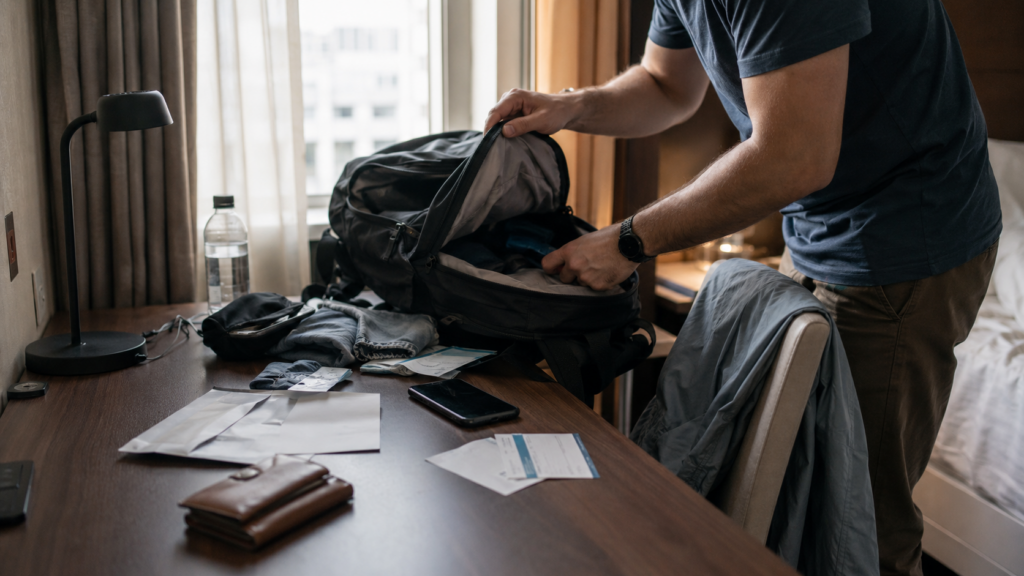
A lost passport feels serious because it affects almost everything: your identity, your hotel stay, your flights, and sometimes your visa status. The first mistake travelers make is spending too long searching after it is clearly gone.
Check the obvious places once. Look inside your bags, jacket, hotel safe, taxi receipt folder, and the last place where you used the passport. After that, switch from searching to creating an official record.
File a police report at the nearest police station. Do not rely only on a hotel note or a tourist desk conversation. Embassies, insurers, and airlines may ask for official proof that the passport was lost or stolen.
Get a physical or digital copy of the report. A case number is useful, but a stamped document is stronger. If the local language is different, ask the hotel to help you explain what happened before you go.
Next, contact your country’s nearest embassy or consulate. Use the emergency contact number if you have urgent travel soon. Emergency passport services usually require proof of identity, a police report, passport photos, and proof of upcoming travel.
This is where preparation saves time. Keep a digital copy of your passport photo page in secure cloud storage. Also keep a copy offline on your phone. If your phone was stolen too, you can still access the cloud copy from a hotel computer or embassy computer.
Emergency Passport Mistakes to Avoid
Do not assume an emergency passport works like a normal passport. Many emergency passports have limited validity. Some allow you to return home but may not allow normal onward travel through every country.
Before booking a replacement flight, ask the embassy whether your emergency document works for your route. Pay close attention to transit countries. A flight that connects through another country may create an extra document problem.
Also check whether your visa was connected to the lost passport. Some destinations require additional steps if your visa, entry stamp, or residence permit was inside the missing document.
A good travel emergency guide should make one thing clear: replacing the passport is only part of the problem. You also need to confirm whether the replacement document can legally move you through your next airport.
Medical Emergency Abroad

A medical issue abroad creates two problems at once. You need care, but you also need to avoid a financial mistake that could make your insurance claim harder.
For serious symptoms or injuries, seek medical help immediately. Do not wait for insurance approval if someone has chest pain, breathing trouble, severe bleeding, loss of consciousness, or signs of a stroke.
For non-life-threatening treatment, call your travel insurance provider before agreeing to expensive procedures or hospital admission. Most policies include a 24-hour emergency assistance number. Use that number, not the general customer service line.
The assistance team can direct you to approved clinics or hospitals. They may also arrange payment guarantees, explain coverage, and tell you exactly what documents to collect.
This step matters because some policies require pre-authorization above a certain cost. Paying first and asking later can create problems, especially for hospital stays, scans, surgery, or specialist treatment.
Ask for itemized documents before you leave the hospital or clinic. You need a diagnosis, treatment summary, prescription records, itemized invoice, payment receipt, and discharge note if admitted. A single card receipt is usually not enough.
Hotel Booking Emergency
You arrive at the hotel, hand over your passport, and the front desk says they cannot find your reservation. This is one of the most frustrating travel problems because you may be tired, late, and carrying luggage in an unfamiliar place.
Do not leave the property immediately. Once you walk away, the hotel and booking platform may become harder to pressure.
Ask the staff to search all versions of your name, email address, booking number, and payment record. Show your confirmation email or app booking screen. Take screenshots before your phone battery dies.
If the booking looks valid, ask the hotel to explain why they cannot honor it. Is the hotel full? Did the platform fail to send the reservation? Was the payment declined? Did the hotel cancel it without notice?
Then contact the booking platform while you are still at the front desk. Ask for emergency relocation support and get a case number. Large platforms often have procedures for confirmed bookings that fail on arrival, but you need a record.
Ask the hotel to call nearby properties of similar quality. Do not accept a vague suggestion to “try the hotel down the street.” If the error came from the hotel, ask whether they will cover the rate difference or transport.
When the Room Is Not What You Booked
Sometimes the booking exists, but the room is not what you paid for. The hotel may offer a smaller room, different bed type, no private bathroom, no air conditioning, or a location far from what was advertised.
Document the difference before unpacking. Take photos of the room, view, bathroom, bed setup, and any missing features. Also save screenshots of the original listing.
Speak to the front desk politely but clearly. Ask for the room category you booked, a partial refund, or a written explanation if they cannot fix it.
If the platform or hotel refuses to help, your documentation may support a chargeback or travel insurance claim. The goal is not to argue for hours. The goal is to leave with a better room, a fair refund, or enough proof to recover money later.
Lost Luggage Travel Emergency
When your suitcase does not appear on the baggage belt, do not rush to your hotel and plan to deal with it tomorrow. That is one of the easiest ways to weaken your claim.
Go directly to the airline baggage service desk before leaving the arrivals area. File a Property Irregularity Report, often called a PIR. This report proves that you reported the missing bag at the airport.
Get the reference number and a copy of the report. Take a photo of the document in case you lose it. Confirm that your hotel address, phone number, email, and bag description are correct.
Ask how the airline will update you. Some airlines provide online tracking links. Others send updates by SMS or email. Confirm whether they will deliver the bag to your hotel or require you to return to the airport.
If you need essentials, buy only reasonable items and keep receipts. Toiletries, underwear, basic clothing, chargers, and medication usually make sense. Expensive fashion items or luxury replacements may cause problems.
If the bag stays missing, create a contents list. Include item names, estimated values, purchase dates, and any proof you have. Photos from earlier in the trip can help show what you packed.
This travel emergency guide rule is simple: delayed luggage is annoying, but poor documentation is what costs you money.
Money, Phone, or Cards Lost While Traveling
Losing your phone or wallet abroad can create a chain reaction. You may lose access to maps, banking apps, hotel confirmations, boarding passes, email, and emergency contacts at the same time.
Start by protecting your accounts. If your phone was stolen, use another device to lock it through Apple Find My, Google Find My Device, or your phone provider. Change your email password first because email often controls password resets for other accounts.
Freeze or cancel lost cards as soon as possible. Most banks allow you to do this inside the app, but you can also call the bank. If you still have one working card, use it carefully until you stabilize the situation.
Ask your hotel for help. Hotels can print documents, call banks, contact police, receive replacement cards, or help with local translation. If you are staying in an apartment, contact the host and ask for practical support.
For future trips, keep one backup card separate from your main wallet. Store a small amount of emergency cash away from your day bag. Write down key phone numbers somewhere outside your phone.
How to Recover the Trip Without Making It Worse
After the urgent problem is under control, many travelers try to force the original itinerary back into place. That instinct is understandable, but it often creates more stress.
Pause before making new bookings. Review your situation honestly. Where are you now? How tired are you? What documents do you still have? How much money can you safely spend? Which parts of the trip still matter most?
Then rebuild the plan around what is realistic. You may need to skip one city, stay an extra night, choose a simpler route, or reduce the number of activities. A recovered trip does not have to match the original plan.
Avoid tight connections and non-refundable bookings for the next few days. Give yourself more space than usual. After a travel emergency, the best plan is often the one with fewer moving parts.
Create a folder on your phone called “Travel Emergency.” Add receipts, screenshots, reports, booking confirmations, airline messages, hotel chats, and names of people you spoke with. Write short notes with dates and times while the details are fresh.
When you return home, submit claims quickly. Airlines, insurers, credit card companies, and booking platforms all have deadlines. Clean evidence sent early usually works better than a messy claim sent weeks later.
A travel emergency does not have to ruin the entire trip. Follow the right order, collect proof, avoid panic spending, and make the next decision smaller. Most travel problems become easier once you stop reacting and start working through the process.
References
- U.S. Department of Transportation — Airline Passenger Rights and Refund Requirements
Official guidance on airline cancellations, refund rights, and passenger protections for flights regulated by the United States. - U.S. Department of State — Emergency Passport Services Abroad
Practical information for travelers who lose a passport overseas, including replacement steps and consular support. - European Commission — Air Passenger Rights under EC 261/2004
Consumer guidance on flight cancellations, long delays, denied boarding, and compensation rules within European jurisdiction. - International Civil Aviation Organization / Montreal Convention
International framework covering airline liability for delayed, damaged, or lost baggage on many international routes.