There is a version of Morocco that lives on social media: golden light pouring through latticed windows in Fes, perfectly styled mint tea on a Marrakech rooftop, lone figures draped in djellabas crossing empty desert dunes. That version is real. You can find it if you look. But Morocco independent travel is also something else entirely: a country that pushes back, tests your patience in the most fascinating ways, and rewards you with experiences no guided tour could ever replicate. The people who love Morocco most are almost always the ones who showed up without a script. This article is for them, and for anyone considering doing the same.
What Morocco Independent Travel Actually Demands From You
Morocco is not a passive destination. It asks something of you from the moment you land. Independent travel here means navigating a country where the infrastructure for solo explorers exists but is rarely straightforward. Trains connect the major cities reliably enough, but buses and shared grands taxis are the real arteries of independent movement and they run on their own logic.
Expect to wait, renegotiate, and occasionally board the wrong vehicle without realizing it for twenty minutes. None of this is a flaw in your planning. It is simply how Morocco operates, and once you accept that rhythm, the country opens up in ways that feel almost personal. The travelers who struggle most are those who arrive with rigid itineraries and a low tolerance for ambiguity. Flexibility is not just useful here. It is the whole strategy.
Getting Lost in the Medinas Beyond the Romanticized Version
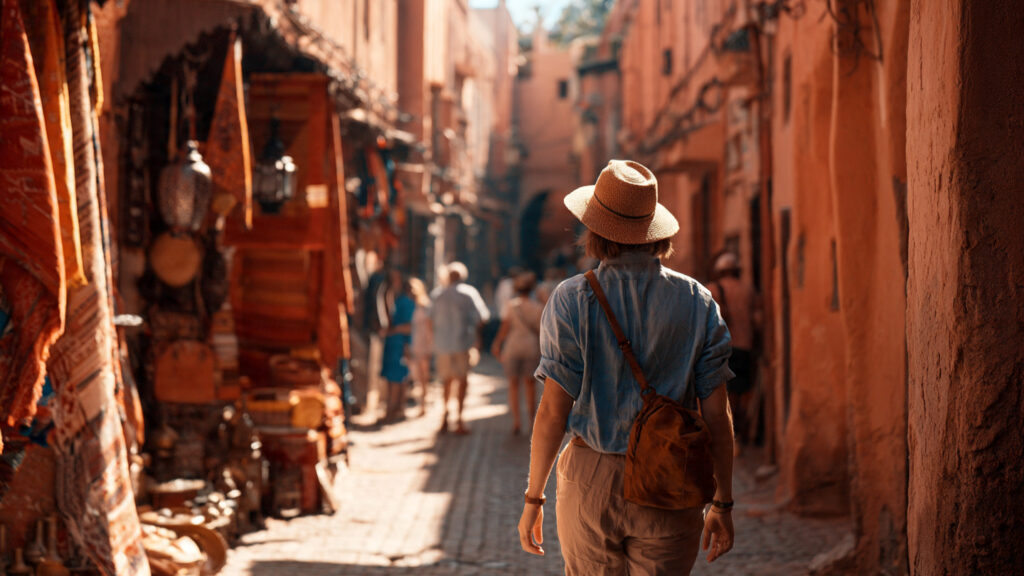
Every travel article will tell you to get lost in the medina. The honest version is that getting lost in Fes el-Bali, a UNESCO-listed labyrinth of over 9,000 streets, is disorienting in a way that is sometimes magical and sometimes just exhausting. The medinas of Morocco are living cities, not open-air museums. Motorbikes come from nowhere. Vendors are persistent. The smell shifts from cedar wood to tannery to spice to something unidentifiable every thirty seconds.
On Morocco independent travel, you move through these spaces without a guide to filter the experience, and that is both the gift and the challenge. Genuine interactions find you here: a craftsman inviting you to watch him work, a family gesturing you into a courtyard. No tour schedule allows for that. But comfort with uncertainty is non-negotiable, because some people will try to sell you something every single minute.
The Riad Experience vs. What Budget Reality Looks Like
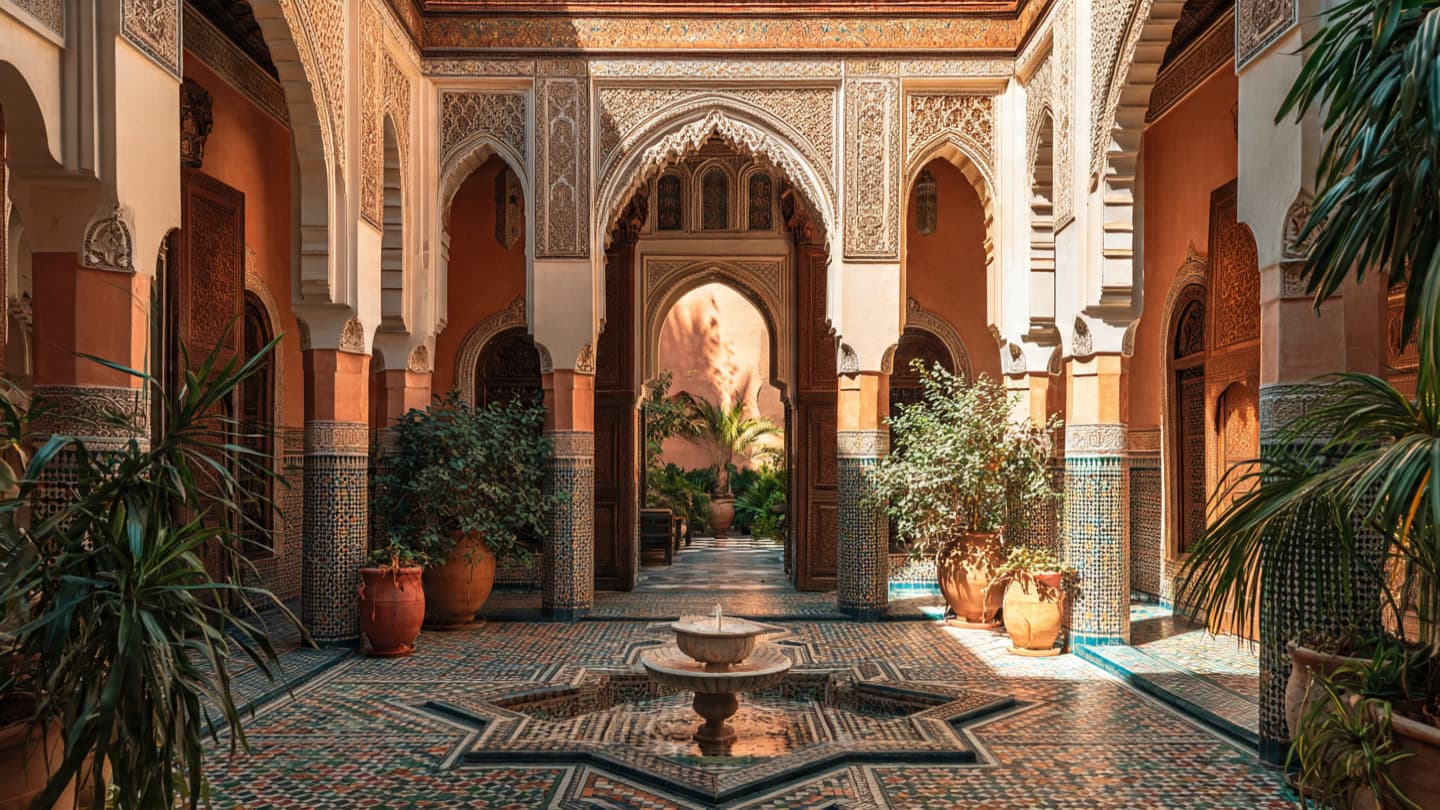
The riad has become the defining image of sleeping in Morocco: a converted courtyard house with tiled floors, carved plaster walls, and breakfast served on a rooftop with atlas views. Riads are extraordinary. But Morocco independent travel on a real budget looks different. Hostels in Marrakech and Chefchaouen are genuinely excellent and have thriving social scenes. Guesthouses in smaller medinas like Meknes, Asilah, and Taroudant often offer the same architecture and atmosphere at a fraction of the cost simply because they are less photographed.
The critical thing is to book medina accommodation in advance during peak months, specifically March through May and September through October. Alley addresses are genuinely impossible to find in the dark, and arriving without a reservation in a medieval city at night is an experience you only need once. Many riads will send someone to meet you at a nearby landmark. Use that service without embarrassment.
How to Handle the Hustle Without Losing Your Manners
This is the part most Morocco travel content softens, so here it is plainly. The hustle in major tourist medinas is relentless and it can wear you down. Faux guides, meaning unofficial locals who offer help and then expect payment, are common near medina entrances. Vendors will follow you. People will claim the road you are walking is closed and offer to show you a better way.
None of this is dangerous. It is a transaction culture operating at full volume. The most effective approach on Morocco independent travel is consistent, calm politeness: a clear “la shukran” delivered without eye contact and without stopping. Engaging, even to explain you are not interested, prolongs the interaction. Showing frustration is counterproductive and culturally reads differently than it might at home. Worth remembering is that the vast majority of Moroccans you meet are not hustlers. They are curious, hospitable, and genuinely interested in where you are from. Learning to distinguish the two quickly is a skill that develops within your first two days.
The Overlooked Destinations Where Morocco Independent Travel Shines
Morocco independent travel shines brightest in places where infrastructure is thin and package tourism has not fully landed. These are the destinations that independent travelers consistently name as their most meaningful experiences:
- Chefchaouen in the off-season: The blue city is overrun in summer, but arrive in November or February and you will have streets to yourself, cold mountain air, and guesthouse owners who will sit with you for an hour talking about the Rif mountains.
- The Draa Valley: South of Ouarzazate, a string of kasbahs and palmeries that most tours pass through in a day. With your own transport or a hired driver, you can stay overnight in villages that feel genuinely remote.
- Asilah: A small whitewashed Atlantic town with a medina so calm it barely registers as one. Artists have lived here for decades. The walls are covered in murals. Almost no one is trying to sell you anything.
- Moulay Idriss: Morocco’s holiest town, built on two hills above the Roman ruins of Volubilis. Foreigners could not stay overnight here until 2005. Now a handful of guesthouses exist and the town rewards slow, respectful exploration.
- The Sahara near Merzouga: Hiring a local guide directly in Merzouga rather than booking a desert package in Marrakech means you spend more of your money locally, have more flexibility, and often get a far better experience.
Eating Well When You Travel Morocco Independently
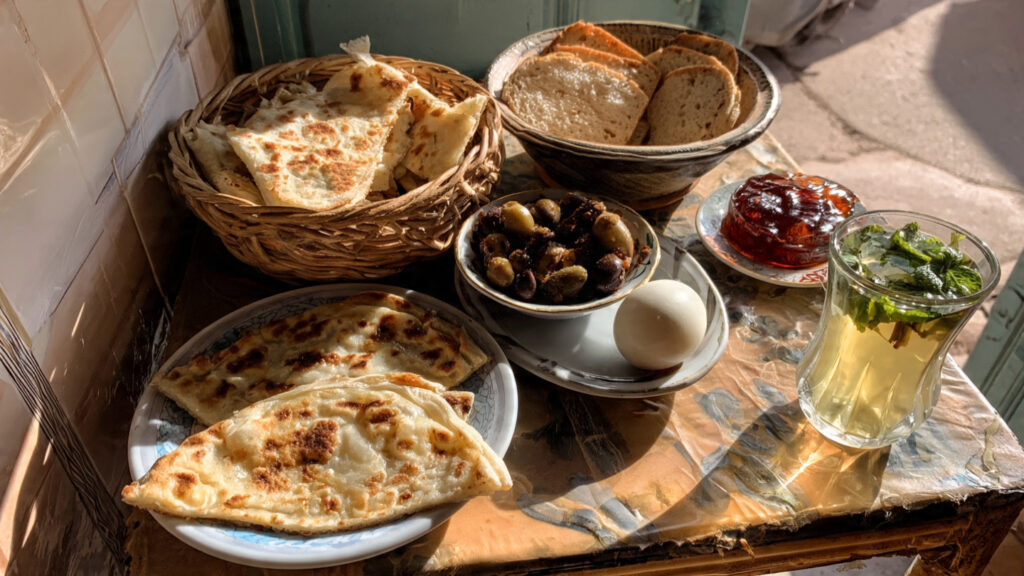
Morocco’s food culture is one of its greatest arguments for independent travel. The further you get from tourist menus, which default to tagine, couscous, and pastilla on repeat, the more interesting the eating becomes. Harira soup from a street cart costs almost nothing and is one of the best things you will eat in the country. Mechoui, slow-roasted lamb, is carved to order in certain medina corners in Marrakech. Msemen, a flaky Moroccan flatbread cooked on a griddle with argan oil and honey, is breakfast at its finest.
Independent travelers have the freedom to eat where locals eat, and in Morocco that freedom translates directly into better food at lower prices. The only practical note is that the cheapest stalls often lack menus in any recognizable language, so ordering becomes a gesture-based negotiation that almost always ends well.
Transport, Safety, and What to Actually Prepare For
Getting around Morocco independently is manageable but requires realistic expectations. The ONCF train network links Tangier, Rabat, Casablanca, Fes, and Marrakech efficiently and comfortably. Beyond those corridors, CTM buses and grand taxis take over. Here is what independent travelers most commonly need to prepare for:
- Grand taxis: Shared long-distance taxis that leave when full. Faster than buses, cheaper than private taxis, and the most local transport experience available to any independent traveler in Morocco.
- Solo female travel: Morocco is a low-risk destination by global standards, but solo female travelers should prepare for persistent unwanted attention in larger cities and have a clear strategy before arriving. Many of the most enthusiastic advocates for Morocco independent travel are women who went alone.
- SIM cards: A local SIM from Maroc Telecom or Orange is cheap, widely available at the airport, and essential for offline maps in medinas where GPS signal drops constantly.
- Cash: Morocco runs largely on cash outside of hotels. ATMs are reliable in cities but scarce in rural areas and the southern desert. Carry more dirhams than you think you need before leaving any major city.
- Hammams: Every town has a local hammam that costs a fraction of the tourist version. Ask your guesthouse owner which one locals actually use and go to that one.
What Morocco Gives You That No Other Kind of Travel Can
There is a particular quality to experiences earned without a guide and without a group: a slower accumulation of detail, a greater tolerance for confusion, a more honest relationship with a place. Morocco independent travel at its best gives you this in abundance. Conversations find you that no itinerary could schedule. A hammam not on any list becomes two hours in a cloud of steam with strangers who feel, briefly, like friends.
Sometimes a misread bus schedule drops you in a town you had never heard of that turns out to be exactly what you needed. Morocco rewards the traveler who arrives without too many expectations and with genuine curiosity about what the country actually is, not the version the photos promised, but the complicated, contradictory, breathtaking real thing.
References
- Lonely Planet, Morocco: https://www.lonelyplanet.com/morocco. Comprehensive destination coverage including transportation, accommodation, and cultural etiquette guidance for independent travelers.
- Visit Morocco, Official National Tourist Office: https://www.visitmorocco.com. Official tourism authority providing up-to-date entry requirements, regional highlights, and travel safety information.